Category Archives: Heart and Home

Four seasons in two cities, spaced out in some homes or not / May 2018

Until recently I led what looked to be quite a global life.  Not in an elite, business class, kind of way, but because of my work I did travel regularly, and many of my closest friends lived in different countries.  There was even a good friendship I had made off the back of one encounter in real life and then a meeting of the minds over time on Facebook.  Some friends I reconnected with after gaps of 10 or 15 years through other friends in a web spreading over several countries.  I had close colleagues whose voices and opinions I had become very fond of over Skype without ever having met them in person.  

Motherhood changed all of that.  In those early months, there is nothing a baby needs more than to be physically close to its parents, and nothing the parents need more than to feel that the baby is ok.  And I don’t say this in a cultic ‘parenting tribe’ way.  The only parenting approach I have ever followed is the #thatjusthappened #whateverworks  school. Exhausted but surviving  A baby-sling was liberating, especially in London, where you can never rely on lifts to be working at train stations.  A pushchair was more liberating in Helsinki, where you ride for free on public transport if your baby is in a pushchair but not in a sling. 

In Helsinki, in the incredibly rainy October/November we had, still not well networked socially, our world got even smaller.  The rental flat we got because of its closeness to our daughter’s nursery became a kind of job for me.  It was brand new, in a concreted, businessy, re-developing area of Helsinki. The flat was as far removed from the memories of log cabins by lakes from my childhood as it was from our draughty Victorian terraced house in  London, which had bellyached constantly from the conflict of a 21st century family living in a 19th century house.  We had spent several weeks of our last month in London without a functioning bathroom but it was hot enough outside to just hose the kids down on the patio, while every winter our state-of-the art wifi-connected boiler ran out of battery in its thermostat and plunged us back into authentically Victorian cold.  During my dissertation work I had pondered Corbusier’s idea of the ‘house as a machine for living’ and now in Helsinki I got to experience being in such a machine, impersonal but more comforting than the perpetual grey rain outside.

I had to keep the flat happy, and at the same time accept I could not control it.  The heating came on not because I turned it on but when a pre-programmed thermostat decided it should.  The house was so well built and insulated that until the mercury hit zero outside the heating barely came on at all, and I was so warmed by the solar energy from our south-facing windows that in this apartment I could pad around barefoot in vest and leggings in the middle of winter.  But the flat extracted a price in terms of closely-regulated behaviour.  The air exchange system required bathroom doors to be shut so that they could be dehumidified properly.  I became the guardian of the apartment’s needs, not its resident, but its maintenor.  I compensated for other people not understanding its needs by remaining perpetually vigilant, pressing appropriate buttons on the environmental control and never complaining that the building, not I, decided what my indoor temperature should be.  

The outside streets were frightening to me.  Twice daily we had to face them to take my daughter to nursery and bring her back.  I could not understand why cars were allowed to ride, even in a stately and slow fashion along our pavement, when there was a whole huge road and a parking lane for their use.  I couldn’t understand how this society, that I had heard was so safe for children, could allow a culture where it was okay for cars to nudge their bonnets onto a zebra crossings as I took my children over calling out ‘green man, safe for us to cross’ more as a tight-throated prayer than a cheerful public service announcement.  When the snow started, the ploughs piled it up along the side of the road so the cars could scoot through, but I would have to lift the pushchair over a ploughed and packed snowdrift eighteen inches high to get onto the crossing, leaving the four year old to get over it as best she could by herself.

I had also given up on getting to know new Finns.  I was tired of psyching up my daughter to approach kids in playgrounds only for her to be rejected, and I was fed up of trying to initiate conversation with mothers who didn’t want to talk to me.  This society was doing well, it was a good society and it didn’t need us, was the firm message coming from Helsinki.  I felt we were seen as disruptive, badly dressed, illiterate.  My machine-flat was clean and warm, and in the absence of human or natural noise, the hum of the trams going past became something I listened out for with affection.  My space became my flat and the tram ride to two baby groups that catered for immigrant mums, and the twice-daily, terrifying, car-harassed nursery run.  I would go to a cheap cafe on the way back from nursery for a re-heated bun and send a picture to Annika with the message “one for Shitstagram,” and shared laughter helped. Then the snow happened. 

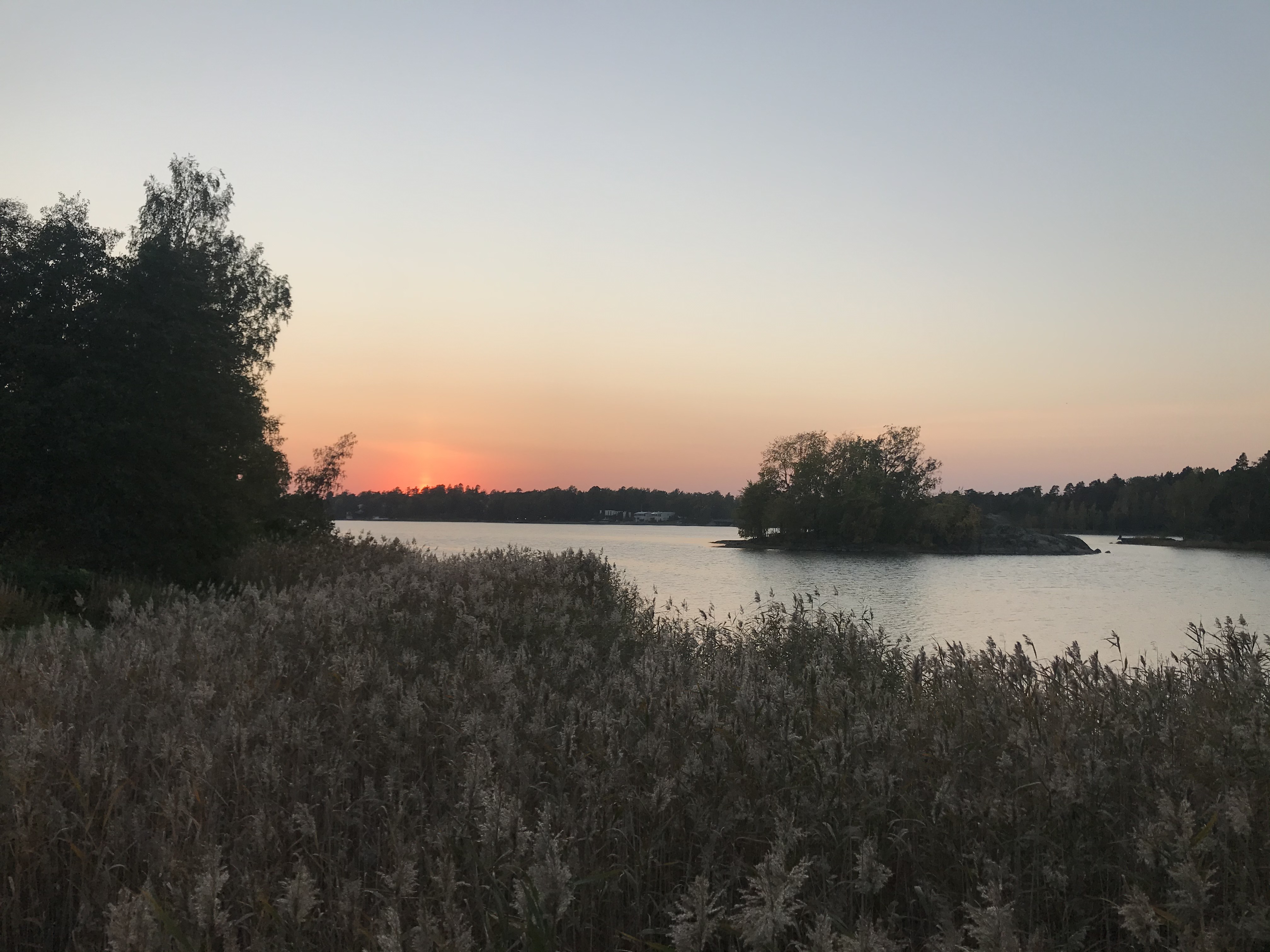
Thank God for the snow.  If I had asked Google to map my movements I would have seen an exponential increase in daily space covered between the end of November and the end of January. Going outside the city at weekends to go tobogganing, or on walks across the frozen sea. In the week, going to a stop on the metro with my baby son and just walking until I found a patch of coastline and looking at the pale gold reeds against the white ice and lapis lazuli sky, or the iron grey islands gripped in skirts of snow, the fir trees like dark hairpins.  I grieved all over Helsinki and Espoo for my grandparents, who had never been able to see that I would come back to Finland, and that I was trying, however inadequately, to give my kids a door to the Finnish side of their identity.  In the new flat we bought by the sea I communed with the amber-coloured wood flooring because it reminded me of them, and then walked over the necklace of little bridges and green islands and blue sea.  

I still feel I am on a piece of elastic and if Toby let go, I would ping back to London so fast that I’d brain myself on the front door at Dennett’s Road.  But summer here is beautiful.  The air smells of pine and roses, and walking through forests carpeted with lily of the valley to a beach that is both secluded and 20 minutes away on the bus feels like a dream.  I am hopeful for picking bilberries and lingonberries in the late summer.  I realised something important about my career, which is that I want to be able to spend more time outdoors.  I don’t know what that looks like.  I feel closer to Asian influences in Finland than I did in the UK, which is interesting, as I assumed the UK was the more global country.  I am not at home.  I can’t be.  But I can try to live resolutely in a place without having to have it feel like home.     
Keeping the lights on

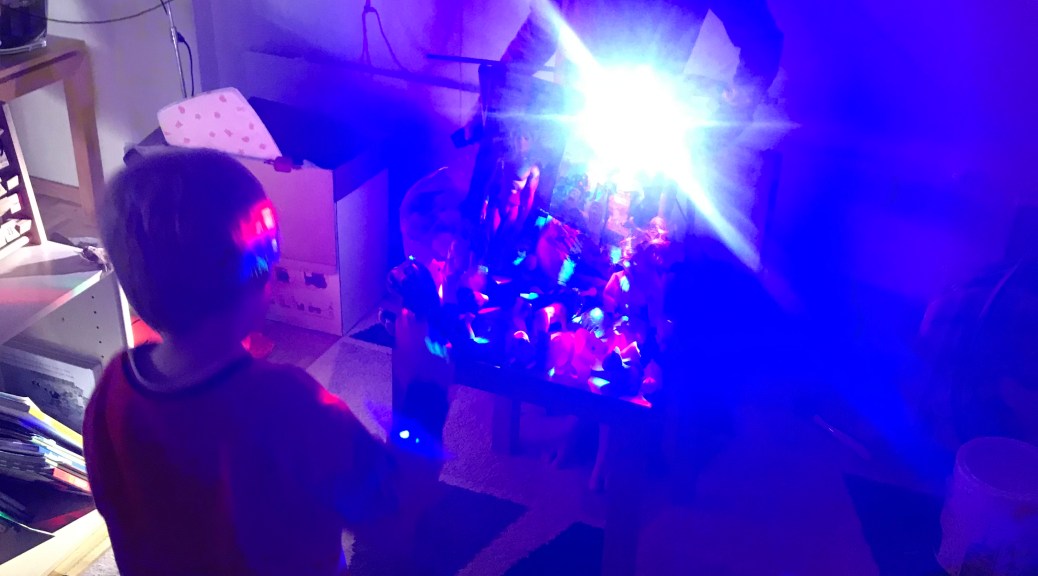
This morning, before I was completely awake, my son came into my bedroom with a handheld torch, instead of putting on the lights, in a bid not to wake me up. His father came in behind him and Harris shone the torch unevenly over the wardrobe for a monent, quickly round the bedside shelves, places where Toby was reaching for clothes or his watch. Harris was technically supposed to be helping Daddy, I think, but he is only 4 so the strange new potential of a light he can move himself is much more interesting than any mere purpose for it.  I lay in bed, my eyes drawn to the torchbeam like a cat’s, as it bounced around the walls and the curtains and the surfaces.  Our messy bedroom, which is also the junk room, still full of unpacked boxes – looked under torchlight like the backstage at a theatre, full of costumes and props.  The magic of light.

Two years ago, when the children’s daycare was nestled between the woods and the sea, I used to bring a torch for Sanna to carry on the return home on dark evenings, and a small electric lantern for Harris to watch in the footwell of his pushchair, and we were festooned with reflective badges and stickers.  Sanna’s torch was very interesting to the 5 year old boys.  “Can we look at your torch, Sanna” they would ask, and she would saunter all cool and “yeah okay” back to the daycare fence, the torch lying in the palm of her hand as if it was the most casual thing in the world to have a torch of your own, but the broad grin bouncing around her cheeks giving away her excitement, and the children would all crowd round to look at the torch for a few minutes and then she would stride home head up, torch out, ready for anything and holding her own. 

One year before that in Helsinki, I had arrived at a different daycare in the city, with the heavy and homesick heart of a recent migrant on a sombre evening and wondering how we would bear our first long, gloomy Finnish autumn-winter —  and been enchanted to see the twinkling pattern made in the dark by a dozen or so high vis vests as the little ones ran skittering around under the daycare’s playground lights.   And suddenly not so scared of the dark autumn-winter (and I did not even know then what it would feel like when autumn could contain the hope for flashy brilliant diamantine snow to come soon, and I did not know about the wonderful last weekend at Linnanmäki, our funfair in town, which turns itself on into one giant kaleidoscopic glitterbomb of coloured lights before closing for the season.  The weather may be too warm for snow this year, the fear of the virus may be too much to try Linnanmäki this year. Let’s not think about that yet.  The kids are good at sorting themselves out, they live in the present – when they want to, they just switch on the disco ball and blast music from a phone and they dance in swirling coloured lights.) 

This autumn I need light more than ever, but I have learnt to take my dark with my light.  I read about the Chinese tradition of the midautumn festival.  Like harvest festival but with extras:  coloured lanterns and mooncakes, I want something like that.  In December the windows all over Finland will light up with Christmas stars but we will need something to keep going with until then. 

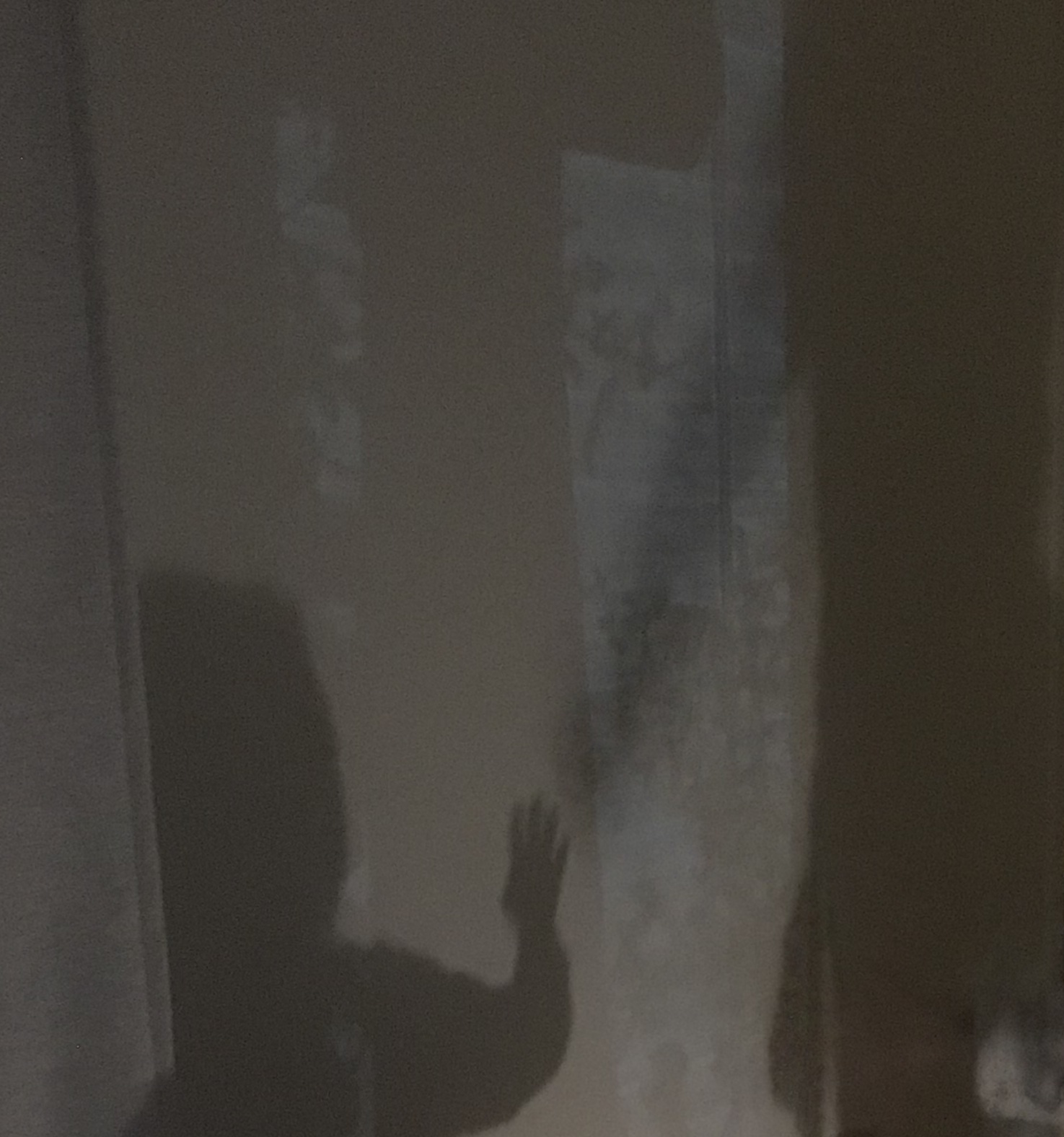
Sometimes in autumn when I wake up and make coffee I look out from the kitchen and the sky is streaked over the sea with pink and peach and purple like a crazy cocktail.  Those are good days.  Half an hour later, the morning sun shines low between the trees and the plants on our balcony and makes grey silhouetted branches and tomato vines on our white walls.  If that morning light  is bright enough and the children are awake they act out dramas of shadow bunnies and shadow dinosaurs.  

Shadow puppets

This year more than any other we know that good enough is wonderful. Boredom has become aspirational and daily life is a celebration.  In spring we put teddy bears in our windows and waved at unknown toddlers on the path who had stopped their parents and were delightedly pointing out our own teddy bears to us. This week Sanna and I decided we will make small lanterns and hang them in our windows.  Even if we can’t see the toddlers in the dark outside, I know they will be there, because at a different time, my children will be out walking a dark path in a strange autumn.  I want those unknown toddlers to know that we have left a light on as a promise that we will be waving at them again, come spring. 

How am I British?

Budleigh

The first person I heard telling me that I could not be both British and Finnish was a prospective Conservative MP in 2009.  It was at a work event that had turned into a long lazy evening of summer-time drinking.  I was used to being professionally bi-partisan, and it was a charming evening with the sun setting over the mellow brick of one of London’s storied members’ clubs, and someone else was buying the drinks, so it was intriguing to find out how different my worldview was to his.  Labour was in power and had been for a long time.  Gordon Brown was exercised over problems to do with national identity which seemed rather academic to me, even though my organisation had been a bit involved; organising the launch event for Lord Goldsmith’s Citizenship Commission and going to meetings about the proposed “Statement of British Values”.  In retrospect, I see it was in the air.  I asked the future MP what had drawn him into politics.  “Well, in one word,” he said, “if you really want to know – MargaretThatcher”.  He continued to be adamant that it was literally impossible to be loyal to two countries at once.  I wasn’t worried or frightened that he and his like would change my life, or my standing in either country.  I saw nationalism as an interesting debate but one on the fringes in a nation with much bigger fish to fry because of the financial crash.

Seven years later, I woke up the day after the British had voted (narrowly) to take Britain out of the EU, and Nigel Farage was on the radio declaring it a ‘victory for decent people’.

So I was wrong about the importance of nationalism in British social life.  Nationalism played out differently among different Brexit voting groups.  The racism of the man who yelled at one of my relatives in a hospital is different to the protectionism of the trade union leader who said that his job was to protect British workers (forgetting that his union happily accepted subs from EU workers in Britain).   But when people on both left and right talk about sovereignty, what can they really mean except that their vision of the nation wasn’t being fulfilled?

Being both British and Finnish, the debate affected me differently to pro-Europeans who were only British.  I would remain an EU citizen despite the vote, whereas their rights are being stripped away.  But I felt my sense of belonging, of having a home, or homes, had been pulled out from under me.  I mulled a lot on what patriotism meant, how to think of my relationship to Britain while also being from somewhere else.  If not an ethno-nationalism of saying “the people here are better”, then what was it?  What did Britishness mean to me?

It was definitely landscape – the Yorkshire moors, the Scottish mountains nosing at the sky, the fields in Devon rolling towards the the fishing boats pulled up on pebble shores; the narrow old streets of London opening onto plazas of glass and steel tower blocks, and people from all over the world streaming through our streets.  And it was the food that came from these places: the fish and chips, the ploughman’s lunch with a  block of crumbling cheddar, and also the food from all over the world that those city dwellers had brought with them.  Britishness for 500 years had been exploratory, outward looking.  Not always to the benefit of those people Britain had looked outwards to, but that curiosity and ambition, both good and bad, had led, I  proudly thought, to Britain’s fairly decent foreign policy and its international aid programme.  In spring 2017 I stood watching clouds and sunshine chase each other over Glastonbury Tor, and thought  ‘Britain, such a beautiful country full of delightful, polite, people who make terrible decisions.’

And, to me, deeply, Britain was in its language. English (I don’t speak Welsh or Gaelic) – that wonderfully absorptive language, full of Latin and Greek and French and German, and loan words from all over the world.  The ketchup on my chips had come via Malaysia, once.  I studied English Literature at university and could never quite believe I was getting a degree for something so lovely to do as read books.  I engaged passionately and traumatically with reading.  I cried after my Medieval exam because I felt I had not been able to fully do justice to Sir Gawain and the Greene Knight, and spent much of that summer lying on the lawn meditating on the Middle English teutonic word ‘draumr’ meaning ‘joy’ which gave us our modern English word ‘dream.’  I nearly went mad dreaming my way into Ozymandias and felt I had tracked some important thoughts about post-Providential Victorian narratives through Shelley to George Eliot.  Twenty years later, for much of the summer of 2016, I hugged this thought to myself.  I was sure Nigel Farage did not love English literature the way that I did. It made me more British than him, in my head, for a while.  I felt that love gave me rights. I had a distressing moment on Twitter when Leavers Daniel Hannan and Douglas Carswell quoted Pied Beauty by Gerard Manley Hopkins at each other over a photo of a landscape.  It was the poem my sister had read at my wedding.  They were on my turf.

There is something to say about what it means to be a re-migrant to Finland too, but I am still in the middle of that.  The only thing that has become clear in recent weeks is that Brexit or no Brexit, I cannot lose my Britishness.  People divorce their spouses but they rarely leave their children (my biological father did, but he was a shit).  For most people, there are ties that are too profound and too intertwined in everything about them to break.  My ties to both my countries are that.  I have two children, my love for one does not displace my love for the other.  The senses I have of both my countries sit happily inside me, they are not in conflict, whatever the future Tory MP thought about it. He was, I have realised, quite simply wrong.

A couple of Saturdays ago I was late to a friend’s baby’s first birthday party here in Helsinki. I explained my truthful reason for lateness, that my baby had been wild-eyed and screaming for 24 hours since a bad flight from London – but I was touched to find people ask me in reply if I had been able to watch the Royal Wedding, as if gently allowing me to reveal the truth behind a little white lie, making space for my Britishness.  And I had indeed watched the wedding on my phone on the tram, sobbing a little at Meghan Markle’s beauty as she entered the church, weeping quite freely on public transport during Bishop Curry’s rousing address about how love could change our world.  I’m sentimental about weddings anyway, but I’m sure that there was something about the Britishness that pulled me in.  The beautiful spring weather, the arches of flowers over the antique stone chapel, Britain coming face to face with our new bi-racial campaigning feminist American actress Duchess, revealed from under her magnificent veil which had been embroidered with symbols of all the countries of the Commonwealth – and a Californian poppy, for her.  We didn’t know before now that the Queen’s Prebendary is a black woman – the Church of England has been changing for a long time but now the world knows.  When I became British I had to swear loyalty to the Queen and her heirs, and I’ve never been sure what that meant.  But when I read the next day that Piers Morgan in the Daily Mail was warning Meghan off from talking about feminism from the palace, because she has servants there (as if he ever cared about intersectionality before) I felt a call inside, saying “find me my sword of words, I must fight with my Duchess!”.   Britishness evolves, and will continue to.  It’s a thing of wonder, complex and rich.  A few weeks later I lay on a hot afternoon in a hidden little corner of a Finnish forest against a smooth granite rock, amid birches and rowan blossom and the white flower called Solomon’s Seal.  It made me think of Bishop Curry’s words about love at the wedding from the Song of Solomon: “Place me like a seal upon your heart”.  I felt drenched in sunshine and love and language, and extraordinarily happy.

sdr


Tomorrow

Tomorrow I start to leave Harris.  He goes to daycare, to the ‘soft start’ where I watch him play and hope that he seems normal and acceptable to the nursery staff and his peers.  By the end of the week he will be spending hours  without me.  The nursery think this will be traumatic for him and me, but largely they are wrong.  He will mind, a bit, but he’s a happy child who likes socialising, he will find rewards in his new days. For me, well – I have been a fiercely loving but ambivalent mother.  The real me was in many ways at work: Essi was in the analysis and the balanced decisions, she was perhaps sometimes hard-to-like but fair, and effective, people said nice words like ‘integrity’ and ‘high-performing teams’. Motherhood swamped me in the ceaselessness of its demands, the emotional whirlpool of unconditional love and curiosity and concern and boredom and loss.  Loss of friends, whose friend Party-Essi had gone underground and not in the underground party way.  Loss of faith in the world of work from everyday sexism such as the interviews at the Climate Group where they asked me twice how I would manage the (risible) travel demands of the job while having a young family.  Loss of interestingness – moving to Finland and our new friends asking my husband what he did at work, whereas my role was obvious, nappy-filled and devoid of potential.

I cannot wait to hand my beloved child over to near strangers and find myself again, to write up the presentations I have promised various people, to write as many letters as it takes to convince someone to pay me again for being work-Essi and to develop my Finnish past this language I acquired as a child based on my grandmother and things my mother remembered and puolukka, juolukka, mustikka, berries, ask me anything about berries and I will reply in Finnish.

I am now up against the State for a while, as my motherhood grant ends and I apply for jobseeker’s allowance, a much more questionable and suspicious being in the eyes of the State.  Mater certa, Jobseeker incerta.  Am I really a jobseeker or a lazy-ass scrounger determined to find a way to freeride and freeload and cause anarchy in this place that depends on a fine balance of work to create its welfare.  The kinds of job I can do don’t even feature on the drop-down menu.  I do not know forestry or asbestos clearance nor am I a teacher or a technology manager.  The 10 digit me that is my personal identification code is in 1996 again, being told by a temp agency hack that ‘the trouble with you is, you’ve got no skills.’  And the one person in the world who is completely and blithely assured of my value who cries for me the way he cries for reasons as fundamental as hunger or loneliness, has no say.  Think of the reference he could provide for me.

The indomitable food provider, forbidder of bins, gatekeeper of the noisy saucepans and wayfinder in the great outdoors.  Plus of course all the roles he does not see, the Listmaker, Button sewer, shopper and parcel collector, medicine remembrancer and hygiene monitor, social support seeker and offeror, place-maker and family activity resource, walking google map for child-friendly toilets. He does not know what will happen this week.  The closest relationship he has ever known, the relationship which overwhelms all others in his need for our closeness, our staring into each other’s eyes, joint exploration of a cardboard box, is changing.  He wouldn’t want it to, although nobody has asked him, and I am ambivalent.  That’s my cardinal quality, ambivalence.  And he has no ambivalence – he wants, or he doesn’t want.  And tomorrow, he doesn’t know what it will bring but I do.  Tomorrow.

In Memoriam Salli Lindstedt

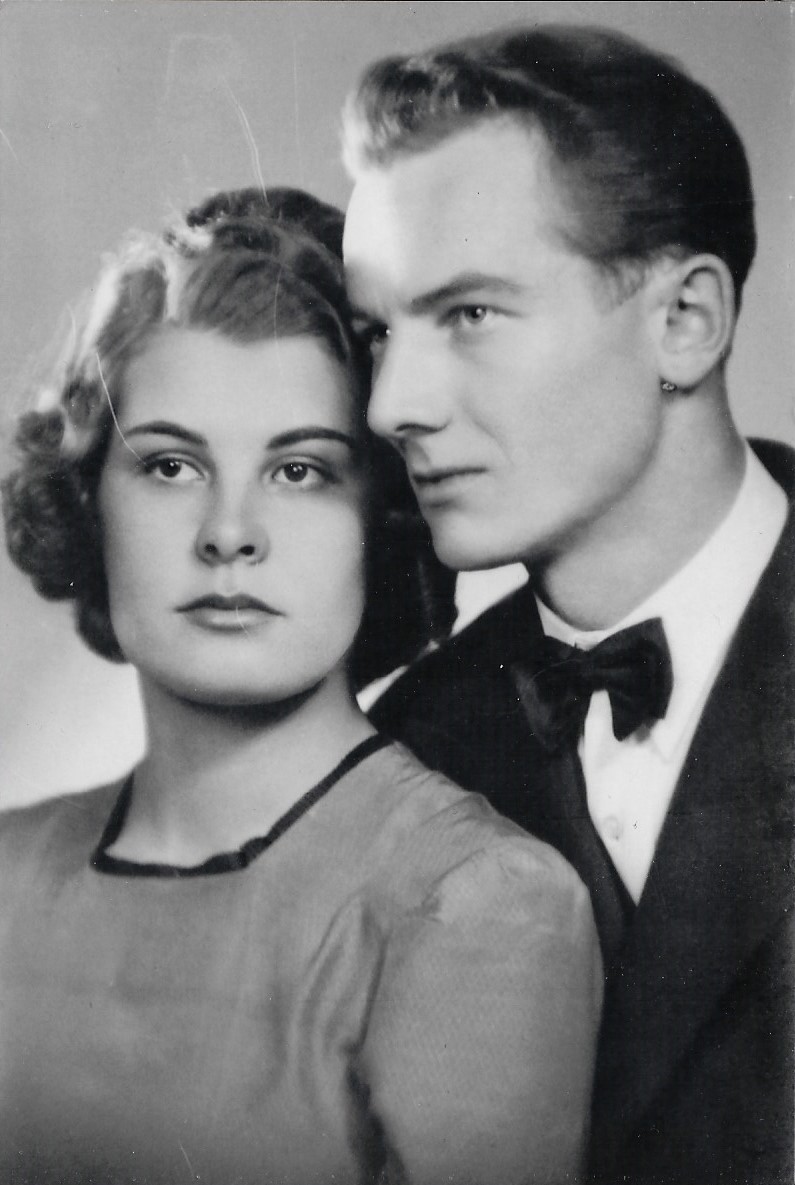
Salli and Erkki

In memory of Salli Lindstedt:

26.09.1926 – 27.05.2016

Every so often, I think:  ‘I wish Salli-Mummo could see this.’

Today it was when I stopped at a small Korean restaurant for lunch.  It provided lovely food, there was modern Korean photography on the walls and modern concert music playing.  Salli never told me that she wished she could have travelled outside Finland, but when I came to visit her and Erkki after a trip to Kenya, she took away my old, formal school portrait, and replaced it with a snap of me, dishevelled, making morning tea on a camp fire in the Rift Valley.   Once, as two boys slid rattling below her window on skateboards, she said enviously ‘wouldn’t you like to do that?’  At the age of 24, I didn’t, but at the age of 70, she clearly did yearn for that adrenaline and freedom.

My relationship with her was close, because as a child I spent a month of every summer with her.  I marvelled then at her busyness, at the incessant round of shopping and food preparation, with  a break after lunch to read the paper, and then on again with a whirl of activity, a bucket of strawberries to stew into ‘soppa’, clothes to put through the mangle, an elderly friend to visit.  She taught me rural virtues, like duty, and not wasting anything, especially food.  If I was displeased with my dinner, she reminded me that when she was small, they had to put birch-bark in the bread to make it go further when the crops were failing.  She took me to stay in the old farm-house near Kemi where she had grown up with her 12 brothers and sisters. If I complained about having to wear unfashionable cast-off trousers and getting covered in bird poo on a day’s berry picking, well, it was either funny, lucky or character building, depending on her mood.  But every morning when I woke, she had already been out, fetching water from the pump and picking bilberries to put in my porridge. She showed me how she wove rugs on the loom in the unused parlour. We visited her mother together in Simo, in a care home where Kaarina lived with Alzheimers and cared comfortably for a doll in her lap.

Part of Salli’s duty to me, and hopefully a pleasure, was to expose me to culture as well as to feed me and make me virtuous and frugal.  We visited the library at least weekly, and sometimes went to concerts, and perhaps once a summer she took me to the spare, plain, wooden cathedral in town, where I acquired no knowledge of religion but learnt to be politely and discreetly bored, an invaluable skill.  Of course, most of what she taught me about culture was implied.  Implied in the few but excellent objects in their home: the paintings on the wall, the classic Finnish designs of glassware and ceramics that we ate from, the classic novels and the encyclopaedia on the book shelves.  She had not had the opportunity for higher education herself, although she had gone for a few years to the small village school, but she had fine taste and an easy capacity to learn.  She may have grown up on a farm in the very north of Finland, and known hunger and Nazi occupation of their barns, but she had made herself refined.  She easily picked up sentences of English from the television.  She let me play with her make up bag when I was a child, and said to me: ‘when you are grown up, you should try to look as much like Grace Kelly as possible.’ Another time, in my 20s, when I was being nagged to find a husband, I asked her if she would mind if I didn’t marry.  ‘Of course not,’ she said.  ‘There’s no point doing something just because it’s the custom.’

It took a long time for the shadows of Alzheimers to close around her completely.  One time, visiting her at the sheltered accommodation in the flat she lived in with Erkki, I saw the newspaper out and found out that she still read the paper cover to cover every day and did the crossword.  She could still say thought-provoking things.  We walked past a rosebush, and she said: ‘for some reason, I prefer a bud to a rose.  A rose is just what it is, even if it’s beautiful; but you don’t know what a bud will become.’

Further on, she was living in a care-home with a beautiful garden.  She was widowed by then, stiff in the joints but still mobile, and brightly talkative.  I had brought my fiancé to meet her.  She had no clear grip on who I was, but her impeccable social graces let us have a wonderful conversation, and we sat and talked in the garden while she periodically twinkled at my fiancé.  I wondered if, tall, good humoured and even-tempered, he reminded her of her own Erkki.  Toby’s theory was that as he was a non-Finnish speaker, she had recognised a kindred spirit in him: someone having quite a nice time but totally confused about what was going on.  Her youngest grandchild Varpu also appeared that day, which gave Salli great pleasure.  As we left, she gripped Toby by the hand and said earnestly, ‘aren’t little girls lovely?’

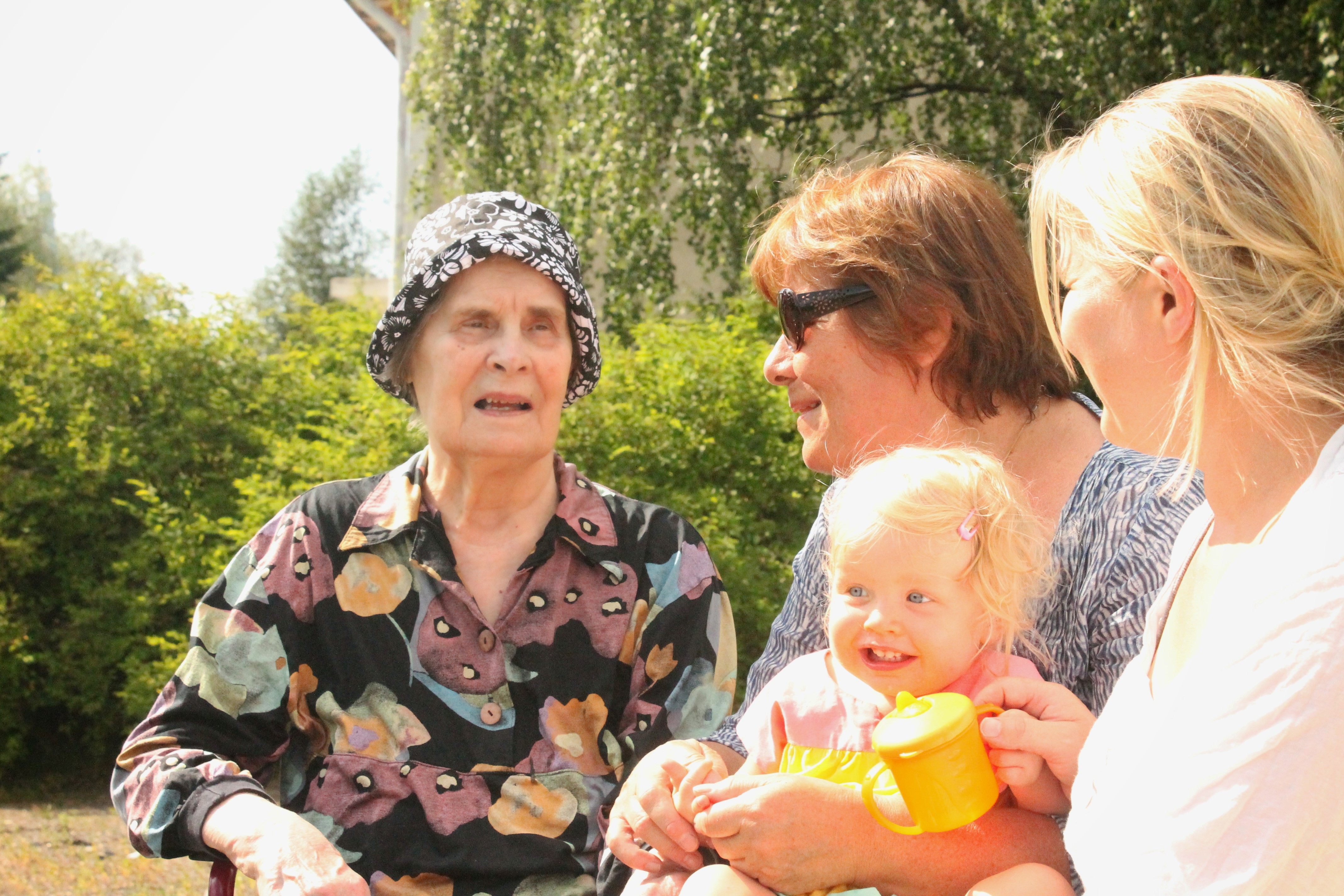
Further on still, two years ago, we got to introduce her to our own little girl.  She almost certainly did not understand the relationship, perhaps she no longer had a concept even for what a family relationship was.  But she knew that there was a baby girl in a yellow dress playing on the swing, for her to watch with pleasure while she strung words together like necklaces of mismatched beads.  Briefly, our daughter had a name for her great-grandmother:  ‘Mummomama.’  To play with a young child in the sun and eat ice-cream, to talk in your own way with people who love you – that seems like a good deal to strike with the world at any time of life.

4 generations